

It’s difficult to walk the streets of Buenos Aires without hearing the word “che” at some point. In fact, Spanish speakers in some countries such as Mexico so strongly associate this word with the people of Argentina that they’ll occasionally refer to an Argentine as “un che.” Although most commonly used in Argentina and Uruguay, particularly in the region of the Río de la Plata, usage of the word “che” is not exclusive to these two countries. Neighboring Paraguay, Bolivia and Brazil sometimes get in on the act too (although the word is spelled tchê in Portuguese-speaking Brazil).
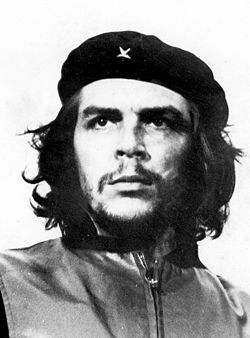
Ernesto “Che” Guevara
So, what exactly does the word “che” mean? Che is an interjection that’s generally used to call attention, similar to how the word “hey” is used in English. It can also be used to express disgust or surprise in the way that “man” or “dude” is employed. The word is almost exclusively used in informal settings, among friends and/or family.
Examples:
“Che, Fede…¿salimos hoy de noche?” // “Hey, Fede…are we going out tonight?”
“Che, no lo puedo creer.” // “Man, I can’t believe it.”
There are several theories that attempt to explain the origins of the word “che”:
Some linguists speculate that che arrived to Argentina and Uruguay with Italian immigrants from the Veneto region of Italy. The Venetian dialect word “ció” is used much in the same way that che is employed.
Others feel that the roots of the word “che” lie in one of the region’s indigenous languages. In Mapudungun, the language of the Mapuche people of Argentina and Chile, che means “person” or “people.” Che is defined as “man” in the Tehuelche and Puelche languages. Lastly, che bears the meaning “my” or “I” in the language of the Guaraní people of northeast Argentina, Paraguay and Brazil.
The Dictionary of the Real Academia Española states that the word is an onomatopoeia that mimics the sound made when trying to catch someone’s attention.
Finally, there are those who hypothesize that the Rioplatense che arose from the Valencian Spanish word “xe,” which is used to express surprise.

Argentine/Rio Platense Lunfardo uses some Spanishized French words. One wonders if Che might have originated from French “you” (Toi), where the T sounds a lot like a Spanish CH
Also, please note that Che is also a “wild card” replacement for someone’s name, not just to “call attention”.
For example, “¡Juan, me estás aburriendo!” (“John, you are boring me!”) could be replaced by: “¡Che, me estás aburriendo!”
The word “toi” in French begins with an unaspitated T. I have never heard any dialect where it sounded like CH.
The use of “Che” in Argentina and Uruguay is likely due to the Italian influence. Italians use “Che” as a pronoun or conjunction quite frequently in their language. Immigration to the Rio de la plata region in the 19th and 20th century was made up of primarily Italians. Not only did they bring their culture but also their language. Rio Platense is often referred to as “Spanish with an Italian accent”. This is also why you see excessive use of Italian hand gestures and so many Italian surnames in the region
che comes from the Guarani
No, it’s Guarani.