Archive for the 'Spanish Translation' Category

English Words that Take on Alter Egos in Spanish

As a non-native speaker of Spanish, it’s a given that certain words will occasionally throw me for a loop during the course of a conversation. What I don’t generally expect is that those words will be from my own language! A number of words such as chequear (to check) and frizar (to freeze) have passed seamlessly from English to the domain of Spanglish; however, the meanings of other words and phrases have morphed substantially, creating confusion among native English speakers.

Here’s a brief list of English words with alter egos in Spanish that I’ve encountered here in Argentina. Try to imagine the words being spoken with a Spanish accent to get the full effect.

un shopping…..a mall

zapping…..channel surfing

el living…..the living room

un lunch…..a buffet of hors d’oeuvres and finger foods/sandwiches

un tupper…..a Tupperware container or any plastic food storage container

un after office…..a happy hour

un ticket…..a receipt

un country..…a gated community

un jogging…..a pair of sweatpants, sweats or a tracksuit

tuning…..customization (usually in reference to cars)

un brushing…..a blow-out (hair)

un slip…..men’s bikini briefs

Have you ever been stumped by an English word or phrase that’s been adopted by the Spanish language?

The Ethics of Translation

Just as professionals such as doctors and lawyers occasionally grapple with ethics, translators and interpreters will likely face a range of ethical dilemmas in the practice of their profession. Certain countries have established codes of conduct that set out guidelines for issues such as quality standards, impartiality, and confidentiality; however, the truly difficult decisions arise when linguists are asked to translate a text that clashes with their personal ethical standards.

Consider these situations:

  • A translator is asked to translate the election platform of a political party whose views the translator vehemently opposes.
  • A translator with pro-life values is assigned a translation project involving educational materials about abortion.
  • A translator firmly against animal cruelty is presented with advertising copy for a company operating in the fur industry.
  • A translator opposed to the business practices of XYZ Corporation is asked to translate information about one of the company’s product lines.

The role of a translator is to objectively render the message provided in the source language into the target language. Ideally, linguists detach themselves from the topic in order to achieve the highest degree of objectivity when reproducing the message. A translator should be able to produce a sound translation even when his or her views come in conflict with those expressed in the text; however, if the source text tackles an issue that the translator feels so strongly about that it precludes his or her ability to remain detached and professional, then the translator should turn down the project.

In addition, it’s important to remember that many subjects are distasteful or unpleasant (e.g. reports of human rights violations), yet information concerning these topics is often needed to help combat horrific practices, investigate crimes, etc. Translators must evaluate not only the topic of the translation but also its end use.

Virtually all professional translators draw the line at translating texts that describe illegal activity, but when the topic of the translation falls into an ethical gray area, the decision to accept or reject the project on moral grounds ultimately rests with the translator. With that said, individuals who rely on translation to put food on the table may be slightly more open-minded than those who can afford to turn down unsavory projects thanks to other sources of income.

All freelancers have the right to choose which projects they take on. If they do turn down a translation, they don’t necessarily owe the client an explanation; nonetheless, it can be helpful to let the client know the reason for the rejection. In many cases, the client/agency will be understanding and supportive; however, translators should be aware that by turning down a project, they run the risk of losing the client.

If objectionable themes are likely to arise with a particular client, translators should consider adding a clause to their contract with that client, outlining the subjects the translator refuses to handle for ethical reasons. Another idea is to draw up a statement of principles, which summarizes the types of texts the translator will not accept on moral grounds. This statement may be sent to translation agencies or direct clients looking to engage the translator’s services so that his or her limits are clear from the very beginning.

The Absence of Certified Translators in the U.S. and Implications for Translation Buyers

Unlike most European and Latin American countries, licensure or certification for translators does not exist within the United States, neither at the federal nor the state level. In the case of interpreters, a program does exist to certify individuals so that they may work within the federal court system; however, interpreters in other fields are not subject to this certification process. Although there’s no official certification program for U.S. translators, they may seek accreditation through professional organizations such as the American Translators Association (ATA), which rigorously test translators before granting them a “seal of approval.” Without a formal certification scheme—and thus a lack of assurances regarding a translator’s competence—many agencies have developed their own certification procedures to vet potential translators.


In other parts of the world, only certified translators may translate certain types of documents, such as legal or medical texts, for example. However, in the United States, translators are not required to be certified or licensed in order to provide a certified translation. Any translators willing to take an oath before a notary public, attesting to the accuracy of the translation and their qualifications to translate to and from a specific language pair, can offer clients certified translations.


Unfortunately, the absence of certification for language professionals in the U.S. means that nearly anyone, regardless of experience, education or aptitude, can pose as a translator. In addition, many translators refer to themselves as “certified” in an attempt to increase their marketability. Given that there’s no licensure or certification program in the United States, it’s wise to question the qualifications of those claiming to be certified translators (i.e. who certified them?). It’s important to note that there are many highly qualified, experienced translators who are neither accredited nor certified by a particular institution.
What can translation buyers do given the lack of translator credentialing programs in the U.S.?

  • Inquire as to whether the translator is accredited by a professional organization for translators.
  • Thoroughly check the translator’s references.
  • Work with a translation agency that has taken the time to put together a trusted team of qualified translators.

Should Translation Apps Be Used by Emergency Personnel?

Every second counts in an emergency. In everyday life, a language barrier can produce frustrating or even comical results, but in critical situations, first responders can’t rely on pantomime or guessing games to determine crucial information about non-English speaking patients’ status or medical history. Doctors at clinics and hospitals frequently use staff medical interpreters, telephone language line services, and in some cases, video medical interpretation systems to help them interact with non-English speaking patients, but emergency personnel in the field rarely have access to these language aids.


A language barrier at the scene of an emergency poses several difficulties. First of all, when emergency personnel encounter a non-English speaking victim, they automatically lose precious time in assessing the patient because of the lack of fluid communication. Even if the patient speaks some English, the likelihood exists that a first responder will misinterpret information, as a person suffering a medical emergency will probably have more difficulty than normal communicating in a second language due to the stress of the situation. Misinformation about the patient’s status could actually be more harmful than no information at all.


Interested users can now download an app version of Google Translate—one of the web’s most ubiquitous machine translation tools—that functions on Apple’s mobile devices such as the iPhone, iPod touch and iPad. In all, 64 languages are supported by the app. In addition, a speech-to-text function is supported for 17 languages, allowing for quicker and more efficient input of text to be translated, and users can listen to translations spoken aloud for 24 languages.


Machine translation may be used in a pinch until qualified interpreters can be brought to the scene or the patient can be provided professionally translated medical information, but such apps must not be considered a substitute for a professional translator or interpreter. As previously discussed on this blog [see “When Never to Use Google Translate”], machine translation has its faults and should never be the sole resource for medical translation or interpretation in life-or-death situations. Inaccurate translations delivered by an app in an emergency situation can actually do more harm than good to the patient. Ideally, instead of fiddling with their smartphones, emergency personnel (paramedics, police, etc.) should be completely free from the worry of interpreting what the patient has to say so they can focus on doing their job: administering first aid.

The Importance of Quality Translations to the Pharmaceutical Industry

In a global economy dominated by the English language—the world’s current lingua franca—obstacles to the clear communication of scientific information abound. With an increasing amount of clinical research and pharmaceutical manufacturing taking place around the world in numerous languages, quality Medical translation services can break down these barriers, expediting the process to bring a drug to market and paring down the clinical trial process. The need for language services may arise during a number of stages, including research and development, submission to and review by regulatory bodies, production, and product marketing.

A company that understands the importance of technical translation possesses a clear competitive advantage. A skilled technical translator, with in-depth medical knowledge and sound translation skills, is critical for the approval of a drug or medical device by a regulatory agency. A poorly-done translation can lead to rejection of the drug by the regulatory body, or worse yet, delays in bringing the product to market or drug recalls. Each one of these setbacks adversely affects the company’s bottom line and has the potential to place consumers’ health at risk.

In a nutshell, when it comes to matters of health and safety, it’s never advisable to scrimp on quality.

Read more on the topic here.

Trends in the Global Translation Market

Companies and multinational corporations operating in the global market require translation services for many aspects of their business. Marketing materials, websites, help forums, compliance documentation, technical handbooks, and human resource manuals all require language support. To meet demand, departments routinely contract with various translation service providers from around the world; however, in light of budget constraints and corporate belt-tightening, perhaps this isn’t the most sensible approach.

The independent market research firm Common Sense Advisory released new data that confirms the benefits of centralizing language services with one trusted provider. Using this approach can lead to decreased costs and faster times to market for greater volumes of translated material. The firm conducted a survey with 226 respondents at international companies that purchase translation services. In spite of global economic concerns, the majority of these firms reported that their translation spending had increased from 2010 to 2011.

Key findings in the report “Translation Performance Metrics” include:

  • Translation costs are extremely small in comparison to the revenue they create. Virtually all companies noted that their translation costs fell well below 1% of total revenue.
  • Key industries are spending more on translation services. Spending increased by more than ¼ in the financial services, health care, manufacturing and insurance sectors.
  • The budget for translation services correlates to the size of the firm. The majority of companies anticipate an increase in their budget for translation services. Firms with revenue in excess of US $10 billion expect the highest percentage increase (31.1%).
  • There’s an upward trend in project size and the number of languages. Large translation projects consisting of one million words or more increased across almost all industries. The organizations that participated in the survey estimated that ¼ of their projects would contain a million or more words by the year 2012. In 2009, projects of 10,000 words or less were translated into an average of 16 languages, with predictions for 2012 estimating some 20 different target languages.

For more information, visit Common Sense Advisory.


Five Term-Search Resources for Translators

Sometimes even seasoned, professional translators come up short in the hunt for a tricky term. Here are five resources available on the Internet where you can search for translations of terms or discuss terminology with fellow translators. Remember: Seek, and ye shall find.


ProZ.com

ProZ.com offers a searchable database of personal glossaries and an archive of questions previously posed by fellow translators. If your search there yields no clues, take advantage of KudoZ, a forum that allows you to pose a question to colleagues in your language pair who can lend a helping hand when the proper translation of a term seems to elude you.


WordReference.com

In addition to this site’s extensive dictionary offerings, WordReference also features an excellent forum that translators can turn to with questions. The forums there are quite active, but if an answer doesn’t seem forthcoming, the moderators often chime in and help.


TranslatorsCafé.com

With a similar set-up to that of ProZ.com, TranslatorsCafé provides a forum for translators to discuss challenging terminology with colleagues. TCTerms allows you to take advantage of collective wisdom when you’re really feeling stumped.


Linguee.com

Although Linguee lacks the interactive/conversational features of the other sites, it’s still a valuable term-search resource for translators. Linguee, the combination of a dictionary and translation search engine, hunts for a match to your query from among assorted texts culled from professionally translated websites and sources in the public domain such as EU documents and patent specifications. Unlike the results provided by a machine translation tool such as Google Translate, every entry that appears in the Linguee dictionary has been translated by humans.


Twitter

Sometimes contributors can be slow to respond in a translation-specific forum, which is why Twitter can be a valuable resource when you’re in a real pinch. Thousands of translators participate in the conversation on Twitter, so if you’ve taken the time to get to know some of them, you can pose questions to colleagues and receive responses, sometimes in mere seconds!

The Meaning of Morfar

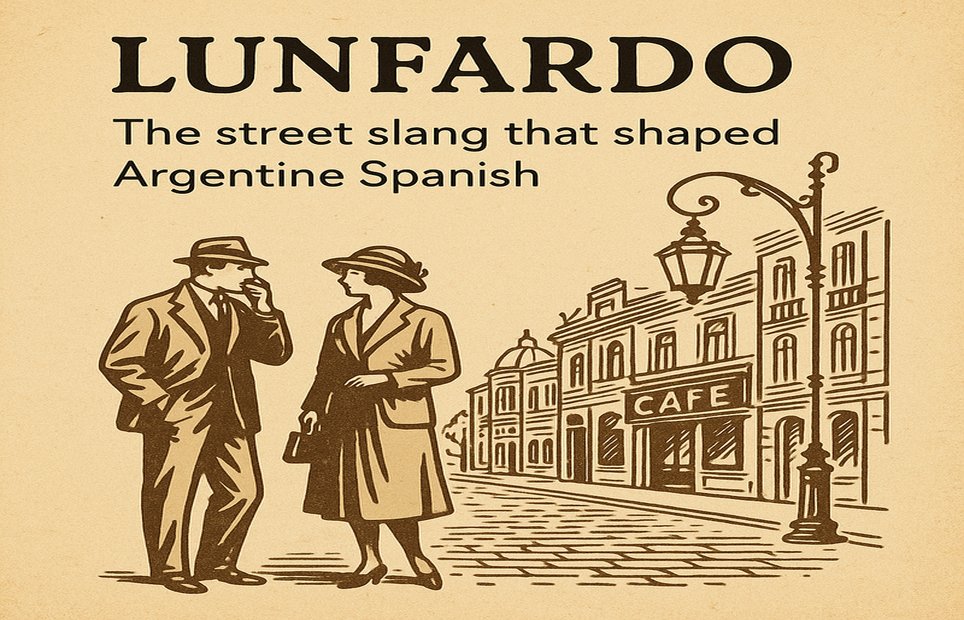
Argentine Spanish is strewn with words and colorful phrases from Lunfardo, a rich vocabulary born on the streets of Buenos Aires in the second half of the 19th century. Now considered a fixture of the Spanish language in Argentina (especially in and around Buenos Aires) and Uruguay, linguists cite the use of Lunfardo as a defining characteristic of the Rioplatense dialect. Add a dash of Argentine flavor to your Spanish vocabulary with the Transpanish blog’s ongoing feature highlighting some of the most frequently used terms in Lunfardo.

In Lunfardo, the word “morfar” means to eat, especially in a hearty, voracious or gluttonous manner. Other possible informal English translations of the word include to get some grub, to get some chow, to chow down, to devour, to wolf down, to gobble (down) and to scarf (down).

In soccer (football) slang, morfar can also be used to indicate that a player hogs the ball.

It’s said that the verb “morfar” stemmed from the French slang word “morfer” meaning—not surprisingly—to eat, although it’s highly likely that both the French and Lunfardo terms arose from the Italian dialect word “morfa,” meaning mouth.

Related words in Lunfardo:
noun morfi: food, grub, chow
noun morfón: glutton, pig, hog

Usage example: Ese chabón es un morfón, se queda con la pelota. // That guy’s a ball hog. He keeps the ball for himself. (He never passes the ball.)

Éstos van en limusina y no tienen para morfar. // These guys ride around in a limo, but they’ve got nothing to eat.

The song Yira yira by the popular 90s Argentine rock band Los Piojos features the word “morfar” in the lyrics.

Cuando rajés los tamangos
buscando ese mango
que te haga morfar
la indiferencia del mundo
que es sordo y es mudo
recién sentirás.

Verás que todo es mentira
verás que nada es amor
que al mundo nada le importa
yira, yira…

Aunque te quiebre la vida
aunque te muerda un dolor
no esperes nunca una mano
ni una ayuda ni un favor.

The High Cost of a Bad Translation

Pay now or pay later. In the world of translation, this saying certainly rings true. Some translation buyers—more concerned with the bottom line than with quality—look for the cheapest translation possible without considering the potential fallout from a translation done for a rock-bottom price. A poorly translated text could tarnish a company’s hard-won corporate image or negatively affect sales, but, in the worst-case scenario, a bad translation could lead to injury or even death.

Translation buyers wooed by low-budget translations don’t always realize that they’re likely sacrificing quality for price. Cheap translations are often performed by inexperienced or unqualified translators or those who hope to garner more clients by translating into languages other than their mother tongue. Some translation buyers bypass human translators altogether, opting to plug their text directly into online machine translation tools such as Google Translate. The results of translations by rookie translators, non-native translators and machine translation tools can be disastrous in certain situations.

The following types of translations require the utmost care and should never be left in the hands of a second-rate translator or a machine translation tool, as doing so could invite catastrophe:

  • Sales and marketing texts requiring both linguistic and cultural understanding
  • Patent translations or other technical literature where accuracy carries great importance
  • Medical and pharmaceutical texts, particularly when such information may mean a matter of life or death
  • Legal texts such as contracts, court orders, and wills, where any error in the text may have profound legal implications
  • Any text that represents the public face of your business or organization, including websites, brochures, manuals, etc.

Companies work tirelessly to cultivate a particular image, but the results of that hard work can evaporate quickly with just one major gaffe. Websites marketing products and services can’t afford to take a lax approach to linguistic blunders. According to an article published by BBC News, UK-based online entrepreneur Charles Duncombe found that “an analysis of website figures shows a single spelling mistake can cut online sales in half.” It makes one stop to think about the potential impact of error-free yet awkwardly-expressed language, or text that flows and works well in one country and culture, such as Spain but not in others, such as Mexico or Argentina.

Inexperienced translators and machine translation tools also lack the ability to fine tune the text based on cultural nuances. The success or failure of a print ad or online marketing campaign rides on the text’s ability to connect with the target audience, and culturally inappropriate aspects of a translation will stick out like a sore thumb to native speakers. Regardless of the technological advances made, machine translation will never learn to pick up on the cultural undertones and subtleties at play in language. Jokes, idioms and wordplay are largely lost on tools such as Google Translate, which fail to capture the “flavor” of the text.

It’s worth mentioning that bad translations can have an impact on more than just the company’s bottom line. Inaccurately translated testimony in a court case could lead to an undeserved conviction; a translation error on a prescription drug label could have life-threatening consequences for a patient; and badly translated instructions in a machine manual could spell injury or death for a factory worker.

Businesses and organizations that prioritize their investment in a high quality translation of their documents, website, etc. project an image of professionalism and integrity, and they ensure the health and safety of those who rely on the company’s products or services.

How to Handle Client Feedback about a Translation

As the great Latin proverb reminds us, To err is human. Inevitably, there will come a time when – in your capacity as a professional translator – you will make a mistake. On the flip side, clients may demand changes to your translation or, worse, ask for a literal translation of the text, in which case maintaining the integrity of the translation while keeping your client happy may pose a significant challenge. Learning how to deal with clients in a diplomatic fashion in either of these scenarios is an important skill for translators.

When a mix-up, error or disagreement occurs, consider applying the following three rules:

1) Own up to the error;

2) Tell the client you’re sorry;

3) Try to make things right.

Additional points for dealing with client feedback:

» Never respond to a client in anger or frustration. It’s easy to fire off a nasty email or phone call when you’re in the heat of the moment. Take a few hours to collect yourself (or wait until the following day) before addressing the problem.

» Ask the client to point out the specific problem areas in the translation. It’s difficult to improve upon your work if the client doesn’t offer examples of quality issues.

Keep in mind that clients (even non-native speakers) who are well-read on the translation’s topic will likely have intimate knowledge of the vocabulary used within a particular field; in this case, the client’s feedback about terminology may well prove to be valuable. However, when the client insists on changes that badly mangle the translation, politely and gracefully point out that you’re a professional linguist, trained to craft natural-sounding, readable text for native speakers of your language. In situations where the client’s changes are stylistic and do not affect the quality/correctness of the translation, it may be best to bow to his or her preferences.

» Don’t take business issues personally. Stay calm and professional, and try to place yourself in the client’s shoes.

» In some cases, when you simply can’t see eye to eye with your client, the best course of action may be to part ways. Not all clients are a good fit.

Do you like it?


Transpanish on Facebook

Suscribe to our blog!

Enter your email address:

Delivered by FeedBurner