Archive for the 'Lunfardo' Category

The meaning of ‘junar’

Argentine Spanish is strewn with words and colorful phrases from Lunfardo, a rich vocabulary born on the streets of Buenos Aires in the second half of the 19th century. Now considered a fixture of the Spanish language in Argentina (especially in and around Buenos Aires) and Uruguay, linguists cite the use of Lunfardo as a defining characteristic of the Rioplatense dialect. Add a dash of Argentine flavor to your Spanish vocabulary with the Transpanish blog’s ongoing feature highlighting some of the most frequently used terms in Lunfardo.

A popular lunfardo term is junar, a verb that is believed to have derived from the Romani language Caló of Spain and Portugal.   In this language, which has inspired many other lunfardo terms, junar means “to listen”. In modern use, though, the meaning has changed.

The first meaning may be described as “to watch” or “look”, although it is more specific than mirar or ver.  That is, junar is to look at someone in a roguish or even leering way.  Oftentimes, it can be used to describe a person’s excessively obvious/aggressive “romantic” gaze, e.g. Él te está junando “He is leering at you”.  Although it refers to a manner of looking in a specific time and space, it can also occasionally have implications beyond the particular instance.

The second meaning is basically synonymous with conocer, which also has a dual meaning—“to meet” or “to know”—though junar more closely compares to the later.  It can translate very directly to conocer in an example such as ¿Junás a María?
“Do you know María?” or less so in another, ¿Quién la juna a María?, which is a rather pejorative way to say that nobody knows María, or that she’s not worth knowing.

The third meaning may be considered a sort of extension of the first and second meanings.  That is, junar can be used both positivity and negatively with reference to a more essential characteristic or intention of a person—a characteristic beyond what is immediately, physically perceivable (e.g. a person’s manner of looking at).   A close common Spanish equivalent here might be a combination of conocer and entender.  Although it has a wider range of use than the first meaning, it commonly relates to romantic situations, e.g. La juna por la infidelidad “He/she knows she is unfaithful”.

It’s interesting to consider, first, how junar of lunfardo changed from the original form of “to listen” from Caló, and second, how the contemporary lunfardo meaning severed.  At what point did the division between listening and seeing begin to blur, or, was the change less organic, i.e. did the initial rioplantense user of it simply decide to do so in this new manner? Finally, the dual lunfardo meaning raises the question: at what point does a physical characteristic, such as a manner of looking at someone, become more than physical—that is, essential of a person?

The word junar turns up in the lyrics of the tango “Atenti Pebeta” by Ciciarco Ortiz and Celedonio Flores.

Cuando estés en la vereda y te fiche un bacanazo,
vos hacete la chitrula y no te le deschavés;
que no manye que estás lista al primer tiro de lazo
y que por un par de leones bien planchados te perdés.

Cuando vengas para el centro, caminá junando el suelo,
arrastrando los fanguyos y arrimada a la pared,
como si ya no tuvieras ilusiones ni consuelo,
pues, si no, dicen los giles que te han echao a perder.

Si ves unos guantes patito, ¡rajales!;
a un par de polainas, ¡rajales también!
A esos sobretodos con catorce ojales
no les des bolilla, porque 1e perdés;
a esos bigotitos de catorce líneas
que en vez de bigote son un espinel…
¡atenti, pebeta!, seguí mi consejo:
yo soy zorro viejo y te quiero bien.

Abajate la pollera por donde nace el tobillo,dejate crecer el pelo y un buen rodete lucí,
comprate un corsé de fierro con remaches y tornillos
y dale el olivo al polvo, a la crema y al carmín.Tomá leche con vainillas o chocolate con churros,
aunque estés en el momento propiamente del vermut.
Después comprate un bufoso y, cachando al primer turro,
por amores contrariados le hacés perder la salud.

Cocoliche and the origins of a regional dialect

Regional differences in the way Spanish is spoken can usually be attributed to either the influence of native languages that exist in a particular area or the languages brought by immigrants that blend with Spanish to create a unique regional dialect. The Spanish spoken in Buenos Aires, as we have discussed in our series on Lunfardo words, is no exception.

Another example of a language influence is Cocoliche, which takes its name from Antonio Cuculicchio, a theater worker in the Podestá theater company established in Argentina and Uruguay towards the end of the nineteenth century. An Italian immigrant, Cuculicchio’s accent was apparently often mocked by others, giving rise to the comical caricature of a figure called “Cocolicchio”, representing a southern Italian.

Cocoliche is a hybrid language that arose from the meeting of Spanish in Argentina and Italian brought to that country by immigrants around the turn of the twentieth century. The result was a pidgin — an oral form of communication that blended elements of two languages to foster communication between diverse groups of people, in some cases simplifying the grammar and lexicon of each language.

Over time, as the Italian immigrants in Argentina spread out geographically and blended more into their new culture, Cocoliche began to disappear. Yet as it became more and more rare to hear the language spoken, per se, its remnants were left — and still remain — in the form of surviving words and turns of accent. Indeed, Cocoliche is the origin of some characteristics commonly associated with the Argentinian accent of Italian immigrants, such as the “ch” sound in “diche” (dice).

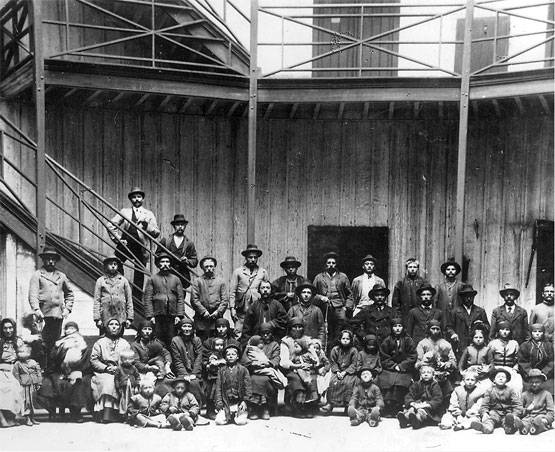
Italian family arriving in Buenos Aires

Some cocoliche words:


The Meaning of the Lunfardo Word ‘Gamba’

Argentine Spanish is strewn with words and colorful phrases from Lunfardo, a rich vocabulary born on the streets of Buenos Aires in the second half of the 19th century. Now considered a fixture of the Spanish language in Argentina (especially in and around Buenos Aires) and Uruguay, linguists cite the use of Lunfardo as a defining characteristic of the Rioplatense dialect. Add a dash of Argentine flavor to your Spanish vocabulary with the Transpanish blog’s ongoing feature highlighting some of the most frequently used terms in Lunfardo.


What does gamba mean?

As with many Lunfardo words, the origin of ‘gamba’ is dubious at best. However, it does have a documented history which elucidates its presence in modern Argentinian parlance.

We can begin with it’s equivalent in Italian, also ‘gamba’, meaning leg. The Italian term fits with its usage in Argentinian Spanish in the common phrase “haceme la gamba” — referring to someone who is helping or has good intentions. Similarly, it’s verb form in Italian, ‘gambettare’, is along the lines of to avoid a conflict — as one who helps a situation may do. This usage often comes up in the context of football (American soccer). That is, a player who handles the ball in such a way that a member of the opposite team cannot steal it.

However, the word takes on an opposite meaning in its usage in the Spanish expression “meter la gamba”, similar to the expression “meter la pata”. Both of these expressions of course mean to screw something up, more or less — the polar opposite of helping a situation, and sometimes at odds with having good intentions. This last meaning perhaps stems from the latin usage of the term ‘camba’, as in leg, referring to that of cavalry.

Another, unrelated usage of the Lunfardo term is in reference to money: 100 pesos or other currency in use, to be exact. ‘Tres gambas’, for example, might be 300 pesos.

The meaning of ‘Cana’

Argentine Spanish is strewn with words and colorful phrases from Lunfardo, a rich vocabulary born on the streets of Buenos Aires in the second half of the 19th century. Now considered a fixture of the Spanish language in Argentina (especially in and around Buenos Aires) and Uruguay, linguists cite the use of Lunfardo as a defining characteristic of the Rioplatense dialect. Add a dash of Argentine flavor to your Spanish vocabulary with the Transpanish blog’s ongoing feature highlighting some of the most frequently used terms in Lunfardo.

Of all the slang terms that languages use, it seems every language has plenty of words for police. One of these within the Spanish language is the Lunfardo word “cana”. Although it is decidedly a Lunfardo word that made its way into Argentinian Spanish, its etymology is still disputed.

Free image courtesy of FreeDigitalPhotos.net
It has a long history, to be sure. The word “cana” actually appeared in the work of Cervantes to mean a police informer. But if it was not originally from the Spanish language, it may well have made its way to Spain from France, as some believe. The word has a striking resemblance to the French word “canne”, which means a reed or cane. This etymology would make sense in the context of its current usage, since police officers historically have carried batons which are very cane-like.

Of course the explanation may be more simple—the word could just be an abbreviation of the Spanish word for canary, “canario”, which has been used in Spain since the sixteenth century. Staying with that region as the word’s source, another option is Spain’s neighbor Portugal. Similar to the Portuguese word “encanado”, literally meaning prisoner in a cage made of reeds, the word could have made it’s way over to Latin America via Brazil.

There’s a more humorous usage relating to being a prisoner, with a possible etymological history in reference to someone who has had a setback of some kind, and who may consequently find himself languishing in jail. Or it could have been a reference to re-hired police officers who had already retired, whom thieves used to call “canosos” for their grey hair.

But however the word made its way into Argentinian Spanish, it has managed to become entrenched in the culture. With frequent appearances in the lyrics of tango songs, and common usage in the general population, the Lunfardo word cana is a well-understood synonym for policia.

The meaning of ‘yirar’

Argentine Spanish is strewn with words and colorful phrases from Lunfardo, a rich vocabulary born on the streets of Buenos Aires in the second half of the 19th century. Now considered a fixture of the Spanish language in Argentina (especially in and around Buenos Aires) and Uruguay, linguists cite the use of Lunfardo as a defining characteristic of the Rioplatense dialect. Add a dash of Argentine flavor to your Spanish vocabulary with the Transpanish blog’s ongoing feature highlighting some of the most frequently used terms in Lunfardo.


The Lunfardo term “yirar,” in its simplest form, means to meander, to wander or to go for a short walk out and about without necessarily having anywhere to get to in mind. It’s possible that the term is derived from the Italian verb “girare,” which literally means to wander along the streets.

In order to really catch the gist of the verb “yirar,” it is important to emphasize the difference between this Lunfardo expression and other related terms in the Spanish language, including “pasear,” “dar una vuelta” and “andar,” for example. The most important feature of the verb “yirar” is the fact that it is undeniably linked to a feeling of laziness. It describes the acts of a person who doesn’t really have a direction in mind; someone who isn’t interested in hurrying to do anything or to get anywhere. “Yirar” is a Lunfardo term distinctly associated with a sloth-like character.

During the 1840s in Paris, it was fashionable to wander around the city as slowly as possible. Whimsical characters and whimsical people were looked upon fondly and the French term, “flâneur,” was used to affectionately describe such people. Parisians were encouraged to indulge themselves in this sloth-like nature. It could be argued that “yirar” is Argentina’s Lunfardo response to “flâneur.”

The term “yiro” is most commonly known as an alternative word for “prostitute,” as it relates to the idea of someone who hangs around on the streets without seemingly having anywhere to go, anything to do, or any schedule to maintain. However, it is possible that the term might also be used to refer to people who wander around without direction in the hope of encountering something interesting at random; people who like to leave certain things to chance and who find planning of any kind quite restrictive.

Are you one of those people who likes to “yirar” on occasion?

The meaning of ‘pucho’

Argentine Spanish is strewn with words and colorful phrases from Lunfardo, a rich vocabulary born on the streets of Buenos Aires in the second half of the 19th century. Now considered a fixture of the Spanish language in Argentina (especially in and around Buenos Aires) and Uruguay, linguists cite the use of Lunfardo as a defining characteristic of the Rioplatense dialect. Add a dash of Argentine flavor to your Spanish vocabulary with the Transpanish blog’s ongoing feature highlighting some of the most frequently used terms in Lunfardo.


Free image courtesy of FreeDigitalPhotos.net

In Lunfardo, the word “pucho” has a variety of meanings. These include “remainder,” or “the leftovers of something,” but it can also be used to mean “cigarette” or the “cigarette butt” which clearly derives from the idea of the “remainder or leftovers of a cigarette.” When used in its diminutive form, “puchito,” the term means “a little,” “a bit,” or “a small piece of something.”

It is possible that the word comes from the quechua (South American indigenous language) word “puchú,” which means “residue.”

Related words in Lunfardo include:

noun faso: which also means cigarette.

Usage examples: Vamos a hacerlo de a puchos, // Let’s do it little by little
Sobre el pucho, nos dimos cuenta de….  // Suddenly, we realized….

The song “Sobre el Pucho,” composed by Sebastián Piana and with lyrics by José González Castillo beautifully features the word “pucho” to describe how it feels to be suddenly discarded like a cigarette butt (pucho) in the street.

Sobre el Pucho

Un callejón de Pompeya

y un farolito plateando el fango

y allí un malevo que fuma,

y un organito moliendo un tango;

y al son de aquella milonga,

más que su vida mistonga,

meditando, aquel malevo

recordó la canción de su dolor.


Yo soy aquel que, en Corrales,

-los carnavales

de mis amores-

hizo brillar tus bellezas

con las lindezas

de sus primores;

pero tu inconstancia loca

me arrebató de tu boca,

como pucho que se tira

cuando ya

ni sabor ni aroma da.

Tango querido

que ya pa’siempre pasó,

como pucho consumió

las delicias de mi vida

que hoy cenizas sólo son.

Tango querido

que ya pa’siempre calló,

¿quién entonces me diría

que vos te llevarías

mi única ilusión?

Suscribe to our blog!

Enter your email address:

Delivered by FeedBurner